Why go in-ground
An in-ground trampoline sits level with the grass instead of standing up on legs. There is no climbing up to get on, the yard looks cleaner, and kids are outside, active and off screens. One of Dig Daddy's Google reviews comes from a family who had one put in.
With the jumping surface at ground level, there is no tall drop off the side, and the trampoline blends into the yard instead of taking it over.
If you already own an above-ground trampoline, ask about it. Some can be moved into the ground with a conversion kit, and the kit maker will say whether yours fits.
What the install involves
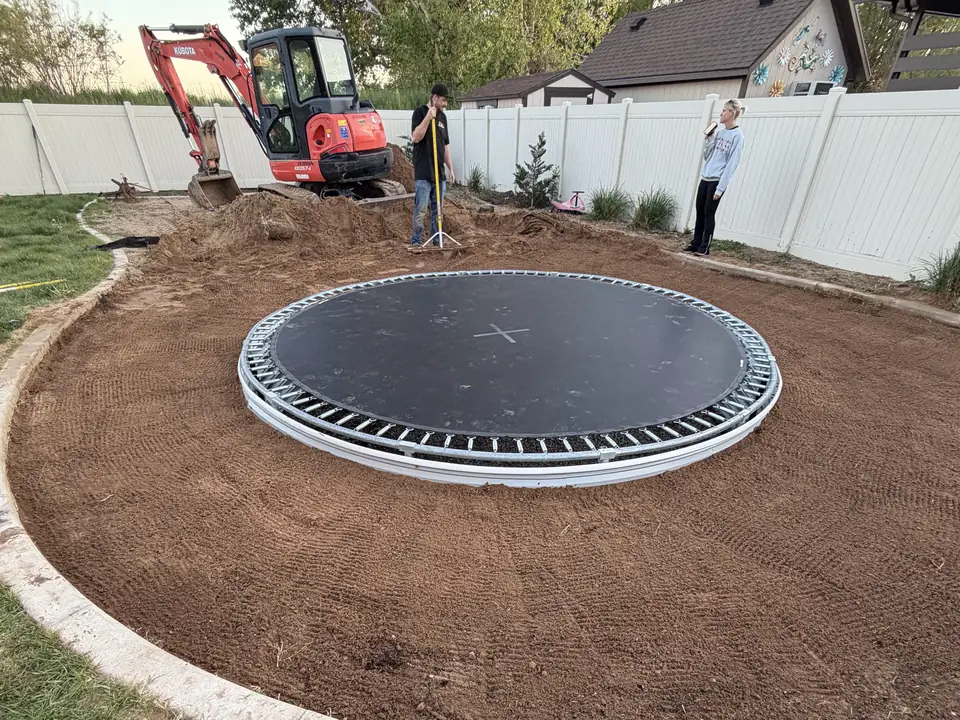
The job starts with the kit. In-ground trampolines are usually sold as kits with a retaining wall that holds the dirt back around the pit. The size and shape of the kit set the size and depth of the hole.
Ryan digs the hole to fit, sets the frame flush with the ground and grades the yard back around it so it looks like it belongs there. The pit needs a way for air to escape when someone lands and a way for water to drain, so the spot you pick and the soil under it matter.
One reviewer mentioned Ryan helping with the full setup of the in-ground kit, not just the dig. Ask about it when he comes out for the estimate.
Before the dig, buried utilities need to be marked through Blue Stakes of Utah by calling 811. Sprinkler lines are private and do not get marked, so show Ryan where yours run.
What to have ready
Have the trampoline kit picked out, or at least know the exact model and size, so the hole is dug to fit it. Choose a spot away from fences, trees, sheds and overhead lines, and check that the machine can get into the backyard through a gate or side yard.
Then send photos of the spot and the way in to 801-928-1577. Ryan will call to set up a live estimate within 24 hours. If a job before yours wraps early, he will call and offer to move you up.
Spring is the busy season, so the earlier you send photos, the better your odds of jumping before summer.
What affects the cost
The size and depth of the hole come first, since a bigger trampoline means more dirt. Soil is next: rocky ground and hard clay take longer to dig than loose dirt. Access counts too, since a narrow gate or a backyard full of obstacles makes the job slower.
The last big factor is the dirt that comes out. It can be spread and graded into the yard, or taken away if there is more than the yard can use. Ryan breaks the price out so you can see your options side by side.